Podlachian and West Polesian
Status presence in public life
Varieties discussed here are not used for official purposes, in education or religious life. However, in 2010, a translation of the New Testament in the western Polesie dialect of the village Simanawiczy (Drohiczyn area) was published, by Fyodor Klimczuk (Klimczuk 2010 Klimczuk 2010 / komentarz/comment/r /
 Климчук, Фёдор Данилович [Klimczuk] 2010. Новый Завет. Перевод на западнополесский говор. Минск: Мэджик.
 ).
).Polesie Dialects are not included in Polish language policy. According to J. Maksymiuk in eight of the ten municipalities in which you can register the Belarusian language as an auxiliary language (due to the requirement of 20% of the population speaking the language), the dominant language is not standard Belarusian, but the language of Podlasie (SIL 2011: 4
SIL 2011 / komentarz/comment/r / SIL 2011. Change request documentation for: 2011-013. [http://www.sil.org/iso639-3/chg_detail.asp?id=2011-013&lang=pdl]
).Media
In the Belorussian journal Bielski Hostineć (Бельскі Гостінець) texts in Podlachian linguistic varieties predominate. In addition, articles concerned with the region are published in the Belarusian journal Часопіс, as well as in the Ukrainian Nad Buhom i Narwoju (Над Бугом і Нарвою).Currently excerpts in Podlasie dialects appear occasionally in the radio and on television for Belarusian and Ukrainian minorities (eg in interviews) – the narrative, however, is in standardBelarusian and Ukrainian (SIL 2011
SIL 2011 / komentarz/comment/r / SIL 2011. Change request documentation for: 2011-013. [http://www.sil.org/iso639-3/chg_detail.asp?id=2011-013&lang=pdl]
).Military documents show that before World War II, the radio station in Baranovichi decided to use the Polish language, "because the ‘local’ language of Polesie does not correspond to the population of the province Nowogródek, nor the Belarusian language to the population of Polessye" (Wysocki 2005: 132
Wysocki 2005 / komentarz/comment/r / Wysocki, Aleksander 2005. „Zarys problemu świadomości narodowej rdzennych mieszkańców województwa poleskiego w świetle dokumentów Centralnego Archiwum Wojskowego”, Biuletyn Wojskowej Służby Archiwalnej 27: 120-135.
).The Podlaskie language website Svoja.org has, on the authors’ page, information about the language of Podlasie as one of the two national languages of Belarusians living in Poland. The website Grodzka Gate Centre in Lublin has a sub-page dedicated to the language ‘chachłacki’ (http://chachlacki.tnn.pl) from southern Podlasie.
Facebook also hosts the language on the fanpage: Howorymo po swojomu, which aims to promote among users of the language who report a different ethnicity (to that of Polish), different because of the language they speak („I ne ważno czy lude kotory tut żywut zowut sebe i swoju mowu biloruskoju, ukraińskoju czy szcze inaksz”). Set up on 16 December 2012 the fanpage within three weeks has collected more than 1,300 ‘likes’.
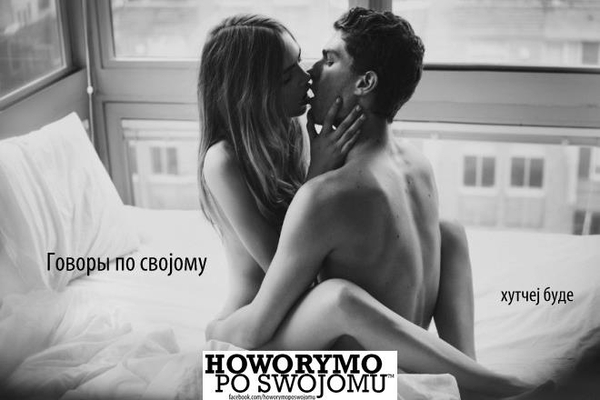
Banner of the fanpage: Howorymo po swojomu (https://www.facebook.com/photo.php?fbid=427883010616266).
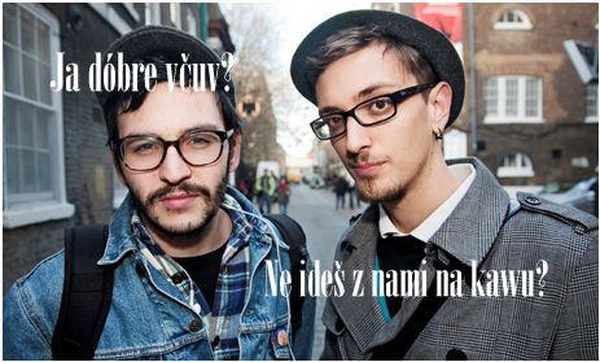
Banner of the fanpage: Howorymo po swojomu (https://www.facebook.com/photo.php?fbid=427789083958992).
School
As previously mentioned, the lack of schools for the linguistic varieties discussed here centres on the language of instruction. There are simply no classes in these varieties. Where there are non-Polish classes in the Bialystok region, teaching is carried out in the literary Belarusian language (Łesiów 1994: 124-125Łesiów 1994 / komentarz/comment/r / Łesiów, Michał 1994. „Gwary ukraińskie między Bugiem i Narwią”, Białostocki Przegląd Kresowy II: 117-137.
na podstawie profilu białoruskiego.
).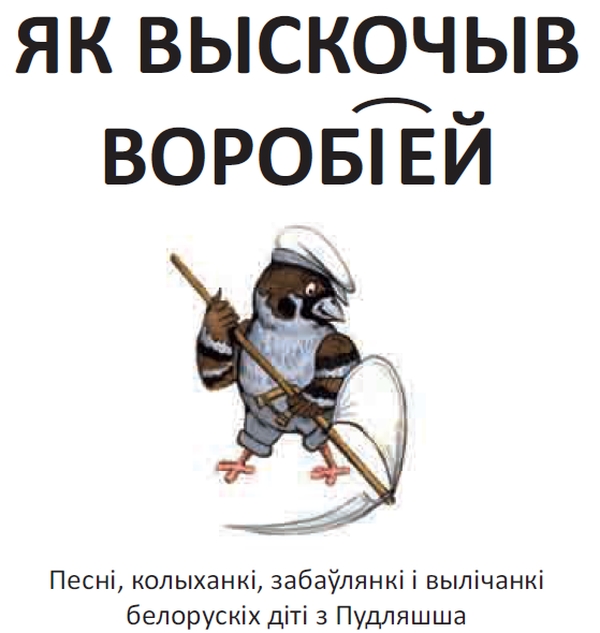
The title page of the Podlasie reading set for children (Fionikowie 2008
Fionikowie 2008 / komentarz/comment/r / Fionikowie, Elżbieta & Doroteusz 2008. Як Выскочыв Воробiей. [http://kamunikat.org/download.php?item=15393-1.pdf&pubref=15393]
).Religious life
The dialects discussed here are not used in the liturgy of the Orthodox Church or the Catholic. Among users dialects are Orthodox, Roman Catholics, and believers only Polish Neo-Uniate parish in Kostomłoty (Byzantine Slavonic Catholic Church in Poland).Reviews
These varieties are often perceived as a combination of Belarusian, Polish and Ukrainian. In the album “Nowa Wola” was the commonly held perception that knowledge of "simple language" makes the user's language "more flexible" and "enriches and promotes understanding of people and the world" (Hlebowicz 2008: 176Hlebowicz 2008 / komentarz/comment/r / Hlebowicz, Bartosz (red.) 2008. Nowa Wola po prostu. Oczami dzieci. Michałowo–Wielichowo: Gminny Ośrodek Kultury w Michałowie.
).The speakers of Polesie dialects identifying as Belarusians are aware of the distinctiveness of their language from the standard Belarusian language (SIL 2011: 4
SIL 2011 / komentarz/comment/r / SIL 2011. Change request documentation for: 2011-013. [http://www.sil.org/iso639-3/chg_detail.asp?id=2011-013&lang=pdl]
).Residents of the village, where there were dialects of mixed Polish-Ukrainian examined by S. Warchoł, claimed that their "speech is somehow more tuneful, different." According Warchoł this effect produced a more open and broad, in comparison to the standard Polish language, pronunciation of the vowel [a] when its position is emphasized, as well as its elongation (Warchał 1992: 29
Warchał 1992 / komentarz/comment/r / Warchoł, Stefan 1992. Specyfika gwar mieszanych i przejściowych na terenach etnicznie zróżnicowanych. Lublin: UMCS.
).Hrigoriy Arkushin (2010 : 139
Arkuszyn 2010 / komentarz/comment/r / Аркушин, Григорій [Arkuszyn] 2010. „Жителі Підляшшя про свою мову”, w: Dagmara Nowacka i in. (red.) Z lubelskich badań nad słowiańszczyzną wschodnią. Lublin: Wydawnictwo KUL, s. 137-149.
) cites the statements of speakers of Podlasie varieties about the language they use. One resident of Wola Uhruska, speaking a dialect transitive between Chełmsko-wołyńskimi and podlaskimi, said its dialect is more like Polish than Podlasie. An informant from Włodawa was of the opinion that in the past it was said in her village that chachłacki - "was a language similar to Ukrainian" (Arkuszyn 2010: 139Arkuszyn 2010 / komentarz/comment/r / Аркушин, Григорій [Arkuszyn] 2010. „Жителі Підляшшя про свою мову”, w: Dagmara Nowacka i in. (red.) Z lubelskich badań nad słowiańszczyzną wschodnią. Lublin: Wydawnictwo KUL, s. 137-149.
). Residents of Krzywowierzba believe that their language is Ukrainian mixed with Polish (Arkuszyn 2010: 139Arkuszyn 2010 / komentarz/comment/r / Аркушин, Григорій [Arkuszyn] 2010. „Жителі Підляшшя про свою мову”, w: Dagmara Nowacka i in. (red.) Z lubelskich badań nad słowiańszczyzną wschodnią. Lublin: Wydawnictwo KUL, s. 137-149.
). From the characteristic –chmo ending, their language is called chmacki. [See: Łesiw 1997: 361Łesiw 1997 / komentarz/comment/r / Лесів, Михайло [Łesiw] 1997. Украïнські говірки у Польщі. Варшава: Украïнський Архів.
] In Moszczona Krolewska (in the commune of Mielnik) an informant also stated that the language he speaks, is "pure Orthodox Lithuanian" ("літовска [...] чисто православная") (Arkuszyn 2010: 139Arkuszyn 2010 / komentarz/comment/r / Аркушин, Григорій [Arkuszyn] 2010. „Жителі Підляшшя про свою мову”, w: Dagmara Nowacka i in. (red.) Z lubelskich badań nad słowiańszczyzną wschodnią. Lublin: Wydawnictwo KUL, s. 137-149.
). In turn, a resident of Stawiszcze (commune of Czeremcha) stressed that, although at times his language was called Ukrainian (eg in Poznań), he does not know if it is – he speaks the language of the Orthodox. Residents of surrounding villages believe that Stawiszcza speak "pure" Ukrainian. In an interview, the informant likened his speech to that of Stawiszcza (Arkuszyn 2010: 143Arkuszyn 2010 / komentarz/comment/r / Аркушин, Григорій [Arkuszyn] 2010. „Жителі Підляшшя про свою мову”, w: Dagmara Nowacka i in. (red.) Z lubelskich badań nad słowiańszczyzną wschodnią. Lublin: Wydawnictwo KUL, s. 137-149.
). Further north, more informants consider themselves Belarusians, but they are aware that they do not speak Belarusian (citing the absence of Dziekania, cf Arkuszyn 2010: 146, 148Arkuszyn 2010 / komentarz/comment/r / Аркушин, Григорій [Arkuszyn] 2010. „Жителі Підляшшя про свою мову”, w: Dagmara Nowacka i in. (red.) Z lubelskich badań nad słowiańszczyzną wschodnią. Lublin: Wydawnictwo KUL, s. 137-149.
). His language informants in Podlasie did not consider their Ukrainian, mostly because their pronunciation is softer than standard Ukrainian (Arkuszyn 2010: 148Arkuszyn 2010 / komentarz/comment/r / Аркушин, Григорій [Arkuszyn] 2010. „Жителі Підляшшя про свою мову”, w: Dagmara Nowacka i in. (red.) Z lubelskich badań nad słowiańszczyzną wschodnią. Lublin: Wydawnictwo KUL, s. 137-149.
).According to M. Sajewicz (1997: 93
Sajewicz 1997 / komentarz/comment/r / Sajewicz, Michał 1997. „O białorusko-ukraińskiej granicy językowej na Białostocczyźnie”, w: Feliks Czyżewski & Michał Łesiów (red.) Ze studiów nad gwarami wschodniosłowiańskimi w Polsce. Lublin: Wydawnictwo UMCS, s. 91-107.
) the population of Bialystok region is divided: into two parts: the western, with a population of Polish people belonging to the Catholic Church, and speaking everyday Polish language, and the eastern, where they live "locals", "Russians", belonging to the Orthodox Church and using the everyday language of "simple" , "Rus", "in our own way".
Texts
Texts in the dialects of northern Podlasie are included in the journal Bielski Hostineć (Бельскі Гостінець). They are both artistic texts (eg, poems, songs) and current affairs (eg, interviews, reports). There are also texts of the language (eg, dictionaries, toponimika). Since 2008, the texts in the Podlasie language versions have been published in the journal of the Belarusian minority Czasopis (Часопіс), as well as the letter of the Ukrainian minority Nad Buhom i Narwoju (Над Бугом і Нарвою) (SIL 2011SIL 2011 / komentarz/comment/r / SIL 2011. Change request documentation for: 2011-013. [http://www.sil.org/iso639-3/chg_detail.asp?id=2011-013&lang=pdl]
).The artists listed below either identify themselves as Belarusians or Ukrainians. Identification of some fluctuated in different periods of creativity (Leończuk 2008: 147
Leończuk 2008 / komentarz/comment/r / Leończuk, Jan (red.) 2008. Wołanie serca. Antologia poezji ukraińskiej Podlasia. Białystok: Książnica Podlaska im. Łukasza Górnickiego.
).In the dialect of Polesie Vasyl Białokozowicz wrote his poem and he criticized the magazine called Niva (Ніва) for promoting the standard Belarusian language in the Podlasie region. In Podlasie dialects have appeared volumes of the poetry of Zofia Saczko since 1982 (eg Над днём похіляна, Шчэ адна весна). Before he met the standard Ukrainian language, Jerzy (Yuri) Hawryluk (who attended Belarusian school), published in the dialect (Leończuk 2008: 8
Leończuk 2008 / komentarz/comment/r / Leończuk, Jan (red.) 2008. Wołanie serca. Antologia poezji ukraińskiej Podlasia. Białystok: Książnica Podlaska im. Łukasza Górnickiego.
). Justyna Korolko published both in Polish and Belarusian, and in the dialect of Podlasie (Leończuk 2008: 64Leończuk 2008 / komentarz/comment/r / Leończuk, Jan (red.) 2008. Wołanie serca. Antologia poezji ukraińskiej Podlasia. Białystok: Książnica Podlaska im. Łukasza Górnickiego.
). In 2002, a volume by Victor Stachwiuka (Багровы цень) appeared. In 2006, Victor Stachwiuk produced a study village of the village of Trześcianka, written in the dialect of the same Podlaskie village (SIL 2011SIL 2011 / komentarz/comment/r / SIL 2011. Change request documentation for: 2011-013. [http://www.sil.org/iso639-3/chg_detail.asp?id=2011-013&lang=pdl]
). The book also includes, among others, folklore content, such as texts and notes of local songs (Stachwiuk 2006Stachwiuk 2006 / komentarz/comment/r / Stachwiuk, Viktor 2006. Siva zozula. Białystok: Białoruskie Towarzystwo Historyczne.
). Maksymiuk created a number of translations of the texts of world literature into Podlasie. In a variant of the language of south Podlasie Stefan (Stepan) and Joseph Sidoruk produce work too.In addition, elements of the Ukrainian language have been enacted as stylistics in Polish folklore texts from Polish-Ukrainian borderland (Głuszkowska 2001: 82
Głuszkowska 2001 / komentarz/comment/r / Głuszkowska, Jadwiga 2001. „Wschodniosłowiańskie elementy językowe w folklorze podlaskim”, w: Elżbieta Smułkowa & Anna Engelking (red.) Język i kultura białoruska w kontakcie z sąsiadami. Warszawa: Wydział Polonistyki UW, s. 81-92.
).Sample texts
Poetry from the region of Białystok
Василь Білокозович (1899-1981)(http://nadbuhom.pl/art_2344.html)
«HIBA»
O «HIBA», руодна дітіна
Чом по-нашому ти не
говориш
Твоя мова якась є інша
[...]
О ніе, наша мова старая
і давня
Як давно є Кіювська Русь
Як давні Біельськ, Дорогічин
і Мельнік
В житю штоденнум правна
На юй говорилі вікамі
Наши батькі і діди
[...]
Ми хочемо так читаті
й пісаті
Як штодня говоримо вдома
Якую мову штодня чуємо
в хаті
Prose
Ale ja povinion byv skazati što-leń Loli. Vona ž nevinovata, što to ne było jeji miêśtie. My minuli škołu, kośtioł, povernuli v staruju šyroku High Street i v sens peršych dvanacceti lêt moho žycia. Koli b ja siudy ne pryjêchav, ja b ne viêdav, što toj sens taki môcny, tomu što tyje lêta ne byli osoblivo ščaślivy čy osoblivo neščaślivy; to byli zvyčajny lêta, ale teper vony voročalisia z zapachom palanych drov, z chołodom, kotory biv uverch od temnych syrych chodnikuv. Mnie zdavałosia, što ja viêdaju, što mene ode schvatiło za sercie. To byv zapach nevinnośti.
Fragment from the Gospel of John translated into West Polesian
(variety from the district of Drahichyn / Драгічынскі раён / rejon drohiczyński in Belarus)
- Зрáзу булó Слóво, і Слóво булó в Бóга, і Слóво булó – Биг.
- Вонó булó зрáзу в Бóга.
- Всэ чы′рыз Ёгó почалó бýты, і быз Ёгó ныц ны почалó бýты, шо почалó бýты.
- В Йім булó буттé, і буттé булó свíтом ля людэ′й.
- І світ в поночóты свíтыть, і поночóта ны охваты′ла ёгó.
- Був чоловíк, послáный од Бóга; ймэ′нне ёгó – Іоáнн.
- Вин прышóв, шоб бýты свíдком, шоб свíдчыты про Світ, шоб всі увíрувалы чы′рыз ёгó.
- Вин ны був Свíтом, алэ′ був послáный, шоб свíдчыты про Світ.
- Був Світ правды′чный, Якы′й освíчуе вся′кого чоловíка, шо явля′йіцьця на світ.
- На свíты був Вин, і світ Ёгó ны познáв.
- Прышóв до свойíх, і свойí Ёгó ны прыйнялы′.
Klimczuk 2010 / komentarz/comment/r / Климчук, Фёдор Данилович [Klimczuk] 2010. Новый Завет. Перевод на западнополесский говор. Минск: Мэджик.
)Dialectal texts
Text from Błonie (near Janów Podlaski)
a dawˈńii̯ to tak buˈło // iˈde veˈłygdeń // to vže / v pu͡ᵒst // sẹrẹˈda / syrẹˈda / pˈi̯atnica i suˈbota // to ve broń ˈbože i mułoˈka ne ˈmožńa buˈło ˈi̯isty // tak // a ˈd́ity ˈb́idny ˈmeluć:a / ˈmeluć:a // o // i̯ak i̯e ˈmały ˈd́ity / žeb ˈi̯isty im ˈdaty //(after: Czyżewski & Warchoł 1998: 11-12
to lon naverˈtyt́... / nasušyt́ na pyˈtelńi lnu // i ˈvertaχa ta hulˈi̯ana i̯e // śaˈdai̯e ˈbaba na zemˈli// i v‿ˈvertaχu ˈmyžy ˈnohyͥ / kuˈlinamy try'mai̯e // i vałˈkom kˈrutyt́ // o // bo taˈḱyͥi̯ syˈryi̯ / i̯ak ny‿ˈvysušonyi̯ / to nẹ‿buu̯... ny / ny‿zˈmełeš́ ˈi̯oho /ny‿skruˈneš // a to skruˈne skruˈne / tuhˈdy navaˈryt́ / pˈroše‿c´e / kartoˈfeĺ saˈgan / naˈsypi̯e v‿vert́aχu / lnom poˈsypi̯e // hoˈłowku kaˈpusty syˈrei̯i pryneˈse / poˈry͡ᵉže [!] v‿ˈduhu ˈtui̯u / o / taˈḱimy skrywˈmahmy // u̯o / i ˈd́ity hˈraščut́ ˈtyi̯i karˈtofli ˈze‿lnom s‿kapˈpustui̯u // o // a tak to brọń ˈbože // i̯ak to vže i̯ak pu͡ᵒst buu̯ // to vže tyχ šyś / śim nẹd́il / to vže brọń ˈbože / ne‿ˈmohu ˈi̯isty ˈd́ity //
a i̯ak pˈryde veˈłygdeń / to ponapyˈkai̯ut́.. baˈbok taˈḱy‿χ v‿hłyńanyh‿horščˈkaχ buˈły // to tam ˈḱilka ˈpeč́uw // pẹˈče to ˈtoi̯e ˈti ˈtoi̯e // to hˈrenč́anyḱki [!] / z‿hreč́ḱi / z‿muˈḱy‿ naˈrobyt́ v‿ˈžornaχ // pruˈśii̯e na ˈšyto to ka... ˈbudut́ hˈrečanyḱy‿ / o vže // to / ˈkaže / ˈbudut́ ˈbułḱy‿ / to ˈbude ˈtoi̯e / o // vže ponapapyˈkai̯ut́ / ponapyˈkai̯ut́ i ždut́ ruzuˈrekcyi̯i //
a ˈd́ity / i̯ak pọˈi̯idut́ na rọzuˈrekcyi̯u / to pryˈi̯i... poˈka pọˈi̯ideš po tui̯ ši)ˈśi ˈdeśa̤t́ ḱiloˈme... ˈdeśa̤t́ vi̯orst // i // poˈka poˈi̯ideš / a pry‿ˈi̯ideš otpra... / to ˈd́ity ˈmało ne‿pọduˈryi̯ut́ // vyhlaˈdai̯ut́ / iˈdut́.. vi̯orsˈtu / dv́i // ti ḱiloˈmetry po ˈpolska // a to... vi̯orsˈtu / dv́i iˈdut́ / i vže bat́ˈḱy‿ pot... „oi̯ / ka / ˈmoi̯i ˈd́ity byˈhut́ // oi̯ ˈmoi̯i ˈd́ity” / ś‿ˈćiło sẹˈłe i̯ag‿ˈvyi̯de / t tak i̯ak proˈcesyi̯a tyχ tyχ... dyˈt́ii̯ // bo ˈtyi̯i fśi kọˈtoryi̯ nẹ‿ˈi̯ide / to pyˈχoto iˈde
Czyżewski i Warchoł 1998 / komentarz/comment/r / Czyżewski, Feliks & Stefan Warchoł 1998. Polskie i ukraińskie teksty gwarowe ze wschodniej Lubelszczyzny. Lublin: Wydawnictwo UMCS.
)Text from Dubiny (near Hajnówka)
Jede chłopeć z marszałkom u swaty. Berut marszałka takoho kob umieu̯ howoryti, kob posach tiahnuti dobre. Howorat tam, torhujećcie, a posli u̯że jédut na łady. Nu a u̯że u̯ toje mołodoji to zbirajećcie bólsz swojakou̯, ta uże robiat hościnu, łady, ładujućcie. To czasom jak ne zładujućcie pro posah, toj roschodiaćcie za posach, bo to u̯se kob bólsz było.(za: Kondratiuk 1972: 196-197
A jak zładujućcie, to tohdy szcze pojede baťko u̯ ohlady, tudy u̯że do joho, ohlediti jakije tam, szto je, czy bohaty, czy małaja rodina, to welmi dobre. u̯że pryjéde, chwalit. Doćcie każe, szto jdi, bo tam dobre, won ono odin, pola mnu͜oho, wsio takoje. Nu j dieu̯czyna u̯że, namou̯lajut prosto, to ne to szto teper tak.
Nu j uże pryjéde s tych ohladuu̯, i u̯żesz tohdy szto? Znou̯ dohowrujućcie, szto pryjéde toj mołodyj na dohowor, na koli tam, jak wesiele, jak szto. Pohoworat, nu j na zapoweď dadut, zapoweď wyczytaje batiuszka. Treba kob try zapowedi projszło, u̯ odnu nedielu i u̯ druhu, a jak nema czasu u̯że mecz, to tak skaże tohdy, deś jakojeś świato, czy tohdy skaże dwie, odnu pry obiedni a druhu u̯że posli.
Kondratiuk 1972 / komentarz/comment/r / Kondratiuk, Michał (red.) 1972. „Dubiny, pow. hajnowski”, w: Antonina Obrębska-Jabłońska (red.) Teksty gwarowe z Białostocczyzny z komentarzem językowym. Warszawa: PWN, s. 195-202.
)Text from Grabowiec (near Bielsk Podlaski)
A byli takije szcze li͜eta, szto bywało staryje lude jak powychodiat, jak zobaczat szto samochod ide, to klakali, na koli͜ena i Bohu molilisie, bo kazali, szto antichrest ji͜ede; a ja ot sam, bo to koliś było świato ruśkie i pu͜olśki razom było, ja tam sidi͜ew, on za wioska na mosti͜e, a tut pokazawsie tot wozduszny szar nad wioskoju, jakraz buło na toje, na Błahowi͜eszczynie, ji͜echali s toho, ji͜echali z Bi͜elśka lude, z odpustu, podiwilise, szto tut krutitsie ton wozduszny szar, to znaczyt bude, wże kazali szto bude skutok świ͜eta, o, i toże szapki zdymali i molilisie Bohu, o to wże za mojej pameti, o jak.(Sawicka i Wróblewski 1972: 190
Sawicka i Wróblewski 1972 / komentarz/comment/r / Sawicka, Irena & Mikołaj Wróblewski 1972. „Grabowiec, pow. bielski” w: Antonina Obrębska-Jabłońska (red.) Teksty gwarowe z Białostocczyzny z komentarzem językowym. Warszawa: PWN, s. 187-194.
)Resources
Dictionaries
Dialects belonging to the group described here have been documented, among others: the dictionary of the language of Kuraszewo village (Jan Pietruczuk) and a dictionary of the language of the village of Chraboły (Mikołaj Wróblewski) (Fionik 2011Fionik 2011 / komentarz/comment/r / Fionik, Doroteusz 2011. „Narodowość – białoruska, język – ruski podlaski”, Czasopis 3. [http://czasopis.pl/czasopis/2011-03/art-5]
).Recordings
In 2012, the disc Піесні спуд Jанова (Songs from Janow) appeared in Bielsk Podlaski with recordings from the Podlasko-Poleski Festival in Motol (Belarus).The website NN Theatre hosts available recordings of the speech of Podlasie, in varieties of the Lublin region – http://tnn.pl/Jezyk_chachlacki_nieznane_dziedzictwo,2297.html.
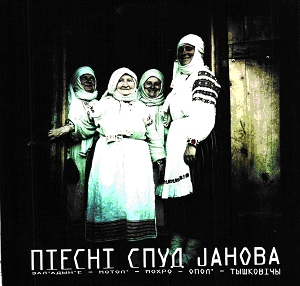
#tłum.#Okładka płyty Піесні спуд Jанова.
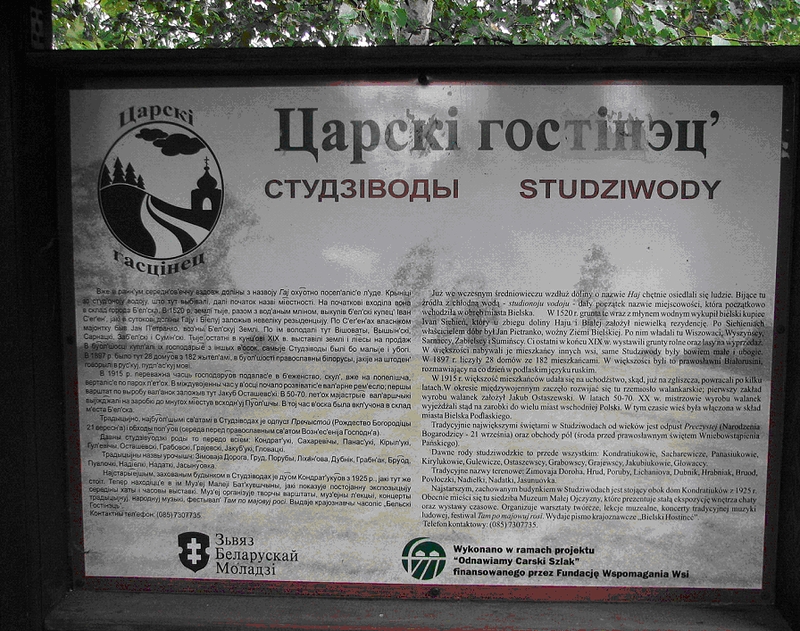
Information board in the Podlasie variety of language and Polish (By Renessaince (Own work) [GFDL (http://www.gnu.org/copyleft/fdl.html) or CC-BY-3.0 (http://creativecommons.org/licenses/by/3.0)], via Wikimedia Commons).
Photographs
In 2008, an album photo Nowa Wola was released, presenting photographs from the life of the village in the municipality of Nowa Wola Michałowo (near Białystok). Texts in the album were in a Polish version (with dialectal elements), English and Belarusian (standard Belarusian) (Hlebowicz 2008Hlebowicz 2008 / komentarz/comment/r / Hlebowicz, Bartosz (red.) 2008. Nowa Wola po prostu. Oczami dzieci. Michałowo–Wielichowo: Gminny Ośrodek Kultury w Michałowie.
).Organizational Meeting#?#
In Studziwody (a district of Bielsk Podlaski), the Museum of the Small Homeland operates. The museum is the patron of the Association of the Small Homeland Museum in Studziwody and produces the magazine, Bielski Hostineć. The museum is also the organizer of the May festival, and the Podlasie-Polesie harvest festival.In Belarus, the ‘Zachodniopoleskie Towarzysto Naukowo-Krajoznawcze Zaharoddzia’ (Western Poleskie Association for Information and Touring) is active, whose purpose is to collect and diffuse information about Polesie Brest-Pinsk (http://zagorodde.na.by).
ISO Code
no code
in 2011, Jan Maksymiuk applied for a ISO 639-3 code for the Podlachian languages - the application was rejected (SIL 2011SIL 2011 / komentarz/comment/r /
SIL 2011. Change request documentation for: 2011-013. [http://www.sil.org/iso639-3/chg_detail.asp?id=2011-013&lang=pdl]
).
The Ethnologue refers to transitional Belarusian-Ukrainian dialects (Lewis 2009Lewis 2009 / komentarz/comment/r /
Lewis, M. Paul (red.) 2009. The Ethnologue: Languages of the World. Sixteenth edition. Dallas: SIL International. [http://www.ethnologue.com/].
).
UNESCO Atlas of the World’s Languages in Danger mentions Polesian as a vulnerable language.
The Linguascale encodes all Belarusian-Ukrainian transitional and Polesian varieties with: 53-AAA-edd.
in 2011, Jan Maksymiuk applied for a ISO 639-3 code for the Podlachian languages - the application was rejected (SIL 2011
SIL 2011 / komentarz/comment/r / SIL 2011. Change request documentation for: 2011-013. [http://www.sil.org/iso639-3/chg_detail.asp?id=2011-013&lang=pdl]
). The Ethnologue refers to transitional Belarusian-Ukrainian dialects (Lewis 2009
Lewis 2009 / komentarz/comment/r / Lewis, M. Paul (red.) 2009. The Ethnologue: Languages of the World. Sixteenth edition. Dallas: SIL International. [http://www.ethnologue.com/].
).UNESCO Atlas of the World’s Languages in Danger mentions Polesian as a vulnerable language.
The Linguascale encodes all Belarusian-Ukrainian transitional and Polesian varieties with: 53-AAA-edd.
- Hawryluk 1988
- SIL 2011
- Lewis 2009
- Czyżewski i Warchoł 1998
- Łesiw 1997
- Wysocki 2005
- Głuszkowska 2001
- Sajewicz 1997
- Duliczenko 2002
- Pazdniakou 2007
- Krywicki 2003
- Hawryluk [?]
- Łesiów 1994
- Maksimiuk 2009
- Michaluk 2010
- Chmielewski 2010
- Kruk 1997
- Mironowicz 2010
- Borciuch i Olejnik 2001
- Antonowicz 1968
- Arkuszyn 2010
- Pawluczuk 1972
- Małecki 2004
- Warchoł 1992
- Smułkowa 2002
- Fionik i Wrubl'ewski 2006
- Tołstoj 1968
- Łapicz 1986
- Klimczuk 2010
- Fałowski 2011
- Fionikowie 2008
- Hlebowicz 2008
- Warchał 1992
- Leończuk 2008
- Stachwiuk 2006
- Kondratiuk 1972
- Sawicka i Wróblewski 1972
- Fionik 2011
- Wiarenicz 2009
- zagrożenie języków / language endangerment
- I.Ignatiuk "Ukraińskie gwary południowego Podlasia
- M.Sarnac'ka - "Pukłunysja swujuj zymli"
- Tablice turystyczne po podlasku i po polsku
- Województwo poleskie w II Rzeczypospolitej
- Mapa Polesia
- Odmiany podlaskie i poleskie
- Gwary zachodniopoleskie na Białorusi
- Przykład ortografii w czasopiśmie Bielski Hostineć
- Użycie alfabetu łacińskiego w ortografii
- Tekst wschodniosłowiański pismem arabskim
- Banner pochodzący z 'Howorymo po swojomu'
- Banner pochodzący z 'Howorymo po swojomu'
- Strona tytułowa podlaskich czytanek dla dzieci
- Tablica w podlaskiej odmianie językowej
- Okładka płyty Піесні спуд Jанова.
- Przejściowe dialekty polsko-białorusko-ukraińskie
- Izoglosy białorusko-ukraińskiej granicy językowej
- Schematyczna granica językowa białorusko-ukraińska