Czech dialects
Presence in the official life
Official status
Under the Act on Minority Groups, Ethnic Minorities, and Regional Languages in Poland, Czech minority is one of the nine officially recognized minorities in Poland.In 1998, Zelów was visited by Vaclav Havel, President of the Czech Republic, and in 2011, by Jiři Pospišil, Czech Minister of Justice, on the occasion of his visit to Łódź.
The media (press, radio, TV)
The monthly magazine Nowiny (formerly known as Nowiny Zelowskie) is issued by the Evangelical-Reformed parish in Zelów, and its archival issues are available online. Articles in the magazine are usually written in Polish, but there are short texts in Czech as well. In the past, the monthly magazine Život was popular among Czech people living in Poland. It was issued in Cracow by the Slovak Society in Poland (presently with a financial help of Ministry of Administration and Digitization). The magazine has been issued since 1958, and until 1995 it was issued by the Sociocultural Association of Czechs and Slovaks in Poland. Presently it contains texts in Polish and Slovak, but they used to be written in Czech as well. The magazine was printed in ca. 2,000 copies monthly.Another magazine popular in Zelów is Český bratr. It has been issued in the Czech Republic since 1924. Copies of the magazine are imported to the parish and made available for everyone. Although reading other Czech-language magazines is somehow impeded, the Czech minority has regular contact with written language thanks to access to online issues of magazines.
What about going to Zelów to try some dumplings?, an episode of series Tourist Encyclopedia of the Region aired on the 28th of November 2009, on 8.45 a.m. on TVP Łódź; it was dedicated to the history of Zelów.
Schools
At the time of the Second Republic of Poland, the majority of Czech schools were situated in Wołyń. At that point, the number of public schools with Czech as the teaching language gradually decreased. In 1924-25, there were nineteen of them, including one bilingual. In 1937-38, there were four Czech-Polish schools, including three with Czech as teaching language. While the number of Czech-language public schools decreased, the number of private schools (exclusively with Czech as teaching language) increased from one to thirteen. They were sponsored by the Czech Education Association, which was established in 1923. Education in Czech was also introduced in some schools with Polish as teaching language. In the 19th century, the number of schools with Czech as the teaching language increased due to immigration of Czech speaking population to Kłodzko Valley and Cieszyn Silesia. During that period, Czech schools in the Kingdom of Poland were located in Zelów, Podżenice, Kamienica Polska, Kuców, Łódź, and Żyrardów (Tobjański 1994: 94 Tobjański 1994 / komentarz/comment/r /
 Tobjański, Zbigniew 1994. Czesi w Polsce. Kraków: Towarzystwo Społeczno-Kulturalne Czechów i Słowaków w Polsce.
 ).
).After the Second Republic of Poland had been created, these schools faced numerous problems. Although they were not closed, the lack of qualified teachers resulted in a lower quality of education.
Native language of public elementary schools’ pupils in Silesian Province (Ger. Provinz Schlesien) between 1864 and 1911 (Tobjański 1994: 93Tobjański 1994 / komentarz/comment/r /
Tobjański, Zbigniew 1994. Czesi w Polsce. Kraków: Towarzystwo Społeczno-Kulturalne Czechów i Słowaków w Polsce.
).
In 1945, the Kłodzko region was annexed to Poland. The majority of over 5,000 of Czech inhabitants of the region moved to Czechoslovakia thanks to the support of the so-called Kłodzko Committee which helped displaced people to find accommodation and job. In 1947, a school with Czech as teaching language was opened in Kudowa for inhabitants of the Czech corner. Another one was established in 1952; this time, it was done on the request of autochthonic population, with German as teaching language. Due to Czech immigration in the 1950s, the school with Czech language was closed in 1960, when the number of Czech-speaking population decreased to 500 people (Tomaszewski 1985: 159ffTobjański 1994 / komentarz/comment/r / Tobjański, Zbigniew 1994. Czesi w Polsce. Kraków: Towarzystwo Społeczno-Kulturalne Czechów i Słowaków w Polsce.
).Language | The number of pupils | |||
| 1864 | 1871 | 1897 | 1911 | |
| Czech | 11 662 | 10 396 | 12 372 | 14 425 |
| Polish | 128 228 | 159 441 | 188 629 | 260 030 |
| German | 390 568 | 418 940 | 498 401 | 589 966 |
| Sorbian | 5013 | 5 376 | 4 182 | 3 968 |
| Polish and German | 22 333 | 22 074 | 37 121 | 61 347 |
| Sorbian and German | 1 322 | 1 452 | 1 147 | 1 234 |
| Overall | 559 190 | 617 680 | 741 850 | 930 970 |
Tomaszewski 1985 / komentarz/comment/r / Tomaszewski, Jerzy 1985. Ojczyzna nie tylko Polaków. Warszawa: Młodzieżowa Agencja Wydawnicza.
; Siatkowski 1962a: 11fSiatkowski 1962a / komentarz/comment/r / Siatkowski, Janusz 1962a. Dialekt czeski okolic Kudowy. Fonetyka, słowotwórstwo. Część I. Wrocław – Warszawa – Kraków: Zakład Narodowy im. Ossolińskich.
; Tobjański 1994: 30ffTobjański 1994 / komentarz/comment/r / Tobjański, Zbigniew 1994. Czesi w Polsce. Kraków: Towarzystwo Społeczno-Kulturalne Czechów i Słowaków w Polsce.
).Learning Czech as compulsory language was dropped after 1919, when schools became property of the local community. Until 1936, it was possible to attend extracurricular Czech lessons, but because of the lack of funds the lessons were cancelled. After World War II, education in Czech was not revived. Ministers and ministerial councils (seniors of the congregation) played the most significant roles in the process of language maintenance since then, applying, among others, the following means: the Liturgy in Czech language on set Sundays, liturgical singing in Czech or declamation of poems during church celebrations. Unfortunately such practices are hardly ever cultivated in the present time; moreover, there are no Czech lessons held in any of Zelów schools. However, J.A. Komeński Educational Kindergarden is run by the Evangelical-Reformed parish in Zelów. Ever since 2010, its Polish-speaking pupils have a chance to learn, through playing, English and Czech; yet, it involves only a small group of children whose parents sign a special agreement. Furthermore, the Association of Czechs in Poland tries to sparkle interest in learning Czech by running the Czech Club since 2012. As part of acquainting themselves with the language, children watch and read stories in Czech, as well as learn poems and songs in Czech. The Association owns a small-scale library with literature for children, adolescents and adults. The situation of Czech minority in Poland (and Polish population in the Czech Republic) is predicted to improve after the Program of Cooperation on education field was signed on the 20th of September, 2012.Religious life
For Czechs in Poland, the reformed faith is one of the basic indicators of their cultural separateness. It is most evident in the case of the inhabitants of Zelów. Although Czech dialects in Poland never were used as liturgical language, members of the Czech minority concentrated in a natural way around the Evangelical-Reformed parish in Zelów. Although they were scattered around Poland, they found their place in communities gathered around other Evangelical-Reformed parishes: in Łódź, in Warsaw, as well as in Bełchatów and Kleszczów (the two latter parishes were established after the parish in Kuców had been liquidated because of the development first of a mine, and then power station in Bełchatów).Faith is an important factor in Czech culture, and it is somewhat distinctive. As a result, the Czech minority in Poland naturally congregates around local parishes. The distinction of faith can be seen in the manner of celebrating church holidays; above all, traditions like Christmas or Easter, but also those connected to the life cycle: birth, baptism, confirmation (the renewal of baptism), wedding, funeral, and even New Year’s Eve (Czechs from Zelów still start New Year’s celebration with a service) (Kościak 2012: 56–62
Kościak 2012 / komentarz/comment/r / Kościak, Barbara 2012. „Zwyczaje zelowskich potomków czeskich emigrantów”, w: Lech M. Nijakowski (red.) Czesi, seria „Mniejszości narodowe i etniczne w Polsce”. Warszawa: Wydawnictwo Sejmowe.
).Fasting is not strictly observed by Czechs during the Christmas time. There is also no special ceremonial with regards to the Christmas table, and the only decoration in the house is a Christmas tree ornamented by the residents. Presents used to have been given to Czechs by the church council; as a rule, they were products that were difficult to obtain by inhabitants of Zelów, e.g. magazines imported from the Czech Republic. During Easter, unlike Catholics, members of Czech Brethren never maintained the tradition of Święconka (the blessing of the Easter baskets) nor baking a bread lamb on Easter Saturday. Only recently have Czechs from Zelów started to follow the tradition of serving dinner on Easter Sunday, and pouring water on each other on Easter Monday.
Giving birth traditionally took place at home. Parents of a child were obliged to report the baby’s birth to a priest. Baptism took place before or after Sunday Service. Confirmation (the renewal of the resolutions of baptism in mature years) in the evangelical-reformed church always takes place on the day of Pentecost (during the Green Week), and is preceded by preparations to the exam from the articles of faith and the Bible.
Weddings by Czechs from Zelów were always preceded by long preparations. The whole process usually began with namluvý ‘matchmaking’, namely pre-arranged meeting in the bride’s house, during which the groom officially proposed to the bride’s parents. The groom, together with his guests, visited the bride’s house, and from there they moved (on foot or in a cart) to church. Wedding receptions usually lasted for several days. Funerals always started at home, from where a body was transported to church. The tradition was accompanied by the practice of stopping a clock in the deceased’s house. In addition, short services were conducted there, during which the choir sang dirges.
The parish in Zelów was established after Czech settlers had purchased Zelów estate in the end of 1802. In June 1803, the Parish Council was chosen. In 1815, Zelów became a part of the Kingdom of Poland, and the parish became a part of Warsaw Unity of Evangelical-Reformed Church. Following the decision of Consistory of the Church, a minister was brought to the parish. On the 13th of July, 1825 celebratory opening of the newly established building took place; at that point, there were ca. 700 people in the community. Apart from the classical-style church of Czech Brethren in Zelów, there are also modernist Catholic church built in 1931-1933, Baptist church built in 1893-1896, Evangelical-Augsburg church built in 1934, and Evangelical-Reformed cemetery.
Czechs in the Evangelical-Reformed parishes in Poland (1924-1930) (Tobjański 1994: 155Tobjański 1994 / komentarz/comment/r /
Tobjański, Zbigniew 1994. Czesi w Polsce. Kraków: Towarzystwo Społeczno-Kulturalne Czechów i Słowaków w Polsce.
).
*The branch in Poznań was established in 1925, and in Cracow in 1926; the data is given for those years
Tobjański 1994 / komentarz/comment/r / Tobjański, Zbigniew 1994. Czesi w Polsce. Kraków: Towarzystwo Społeczno-Kulturalne Czechów i Słowaków w Polsce.
).| Community | 1924 | 1930 |
| Zelów | 2 450 | 2 719 |
| Kuców | 505 | 529 |
| Żyrardów | 187 | 184 |
| Łódź | 360 | 226 |
| Warszawa | 146 | 120 |
| Tabor Wielki | 795 | 840 |
| Lublin | 15 | 30 |
| Poznań | 18* | 20 |
| Kraków | 24* | 35 |
| Michajłówka | 162 | 264 |
| Kupiczew | 180 | 256 |
| Mirotin | 36 | 87 |
| Boratin | 162 | 210 |
| total | 5 040 | 5 520 |
Czechs in Zelów, according to religious denomination (1930) (Tobjański 1994: 156Tobjański 1994 / komentarz/comment/r /
Tobjański, Zbigniew 1994. Czesi w Polsce. Kraków: Towarzystwo Społeczno-Kulturalne Czechów i Słowaków w Polsce.
).
Tobjański 1994 / komentarz/comment/r / Tobjański, Zbigniew 1994. Czesi w Polsce. Kraków: Towarzystwo Społeczno-Kulturalne Czechów i Słowaków w Polsce.
).| number of followers | |
| Reformed Church |
2 719 |
| Baptists | 997 |
| Free Reformed |
60 |
| Metodists | 57 |
| total | 3 833 |
Czechs in Poland, according to religious denomination (1931) (Tobjański 1994: 153Tobjański 1994 / komentarz/comment/r /
Tobjański, Zbigniew 1994. Czesi w Polsce. Kraków: Towarzystwo Społeczno-Kulturalne Czechów i Słowaków w Polsce.
).
Tobjański 1994 / komentarz/comment/r / Tobjański, Zbigniew 1994. Czesi w Polsce. Kraków: Towarzystwo Społeczno-Kulturalne Czechów i Słowaków w Polsce.
).| Faith | number of followers | % |
| Roman Catholic | 8 984 | 23.5 |
| Greek Catholic | 251 | 0.6 |
| Orthodox | 21 672 | 56.9 |
| Evangelical-Lutheran | 213 | 0.6 |
| Evangelical-Reformed | 5,017 | 13.2 |
| Evangelical-United | 356 | 0.9 |
| Evangelical without specification | 183 | 0.4 |
| another Christian | 1 237 | 3.2 |
| Jewish | 95 | 0.2 |
| unspecified or unbelievers | 37 | 0.1 |
| unknown | 52 | 0.1 |
| total | 38 097 | 100 |
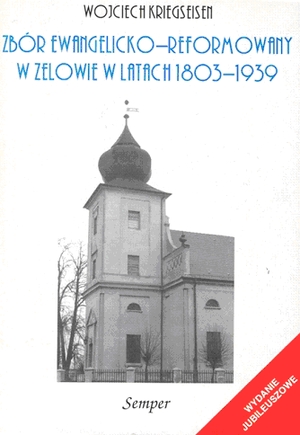
Cover of book by Wojciech Kriegseisen, The Evangelical-Reformed Congregation in Zelów in 1803-1939.
It is worth mentioning that until 1972, Kłodzko Valley was a part of the Roman Catholic archdiocese in Prague; the town was joined to Wrocław archdiocese by Pope Paul VI.
In April 2007, the Evangelical-Reformed Church in Poland celebrated the 550th anniversary of the Church of Czech Brethren, and the 450th anniversary of the Polish Church of Czech Brethren.
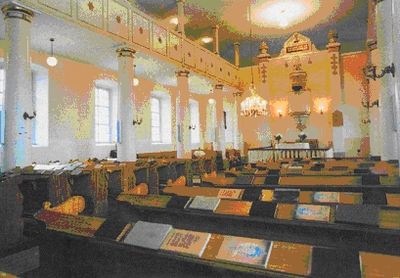
The interior of the Evangelical-Reformed congregation in Zelów. Photo: T. Wicherkiewicz.
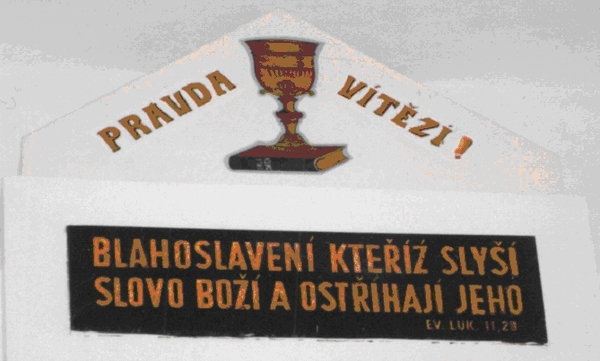
Plaque in the Evangelical-Reformed congregation in Zelów. Photo: T. Wicherkiewicz.
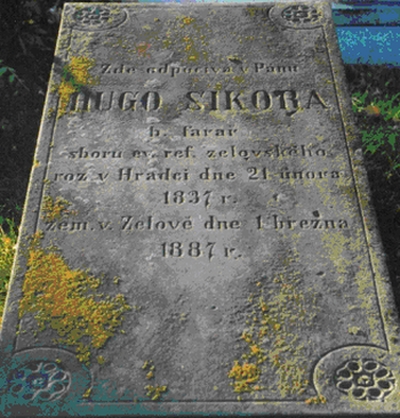
Gravestone in Zelów. Photo: T. Wicherkiewicz.
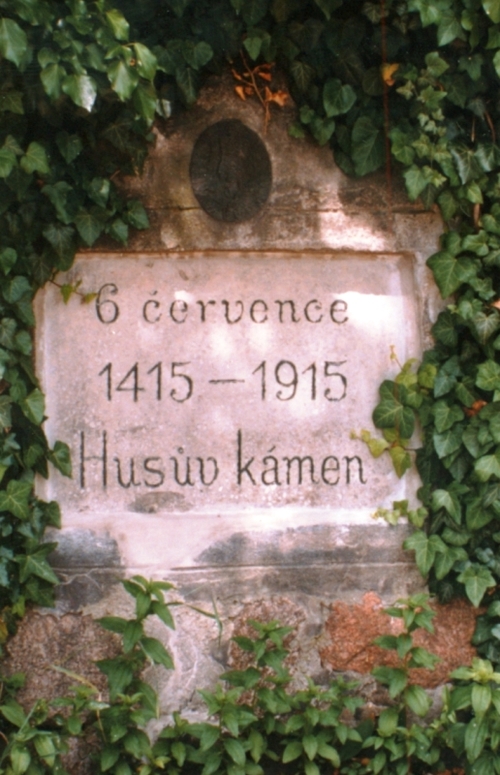
Husův kámen in Zelów. Photo: T. Wicherkiewicz.
Prestige
In 2008, thanks to a donation given by Minister of the Interior and Administration, the Days of Czech Culture in Poland were organized in Zelów. The Czech Society in Poland has been active since 2010, and in 2011 it organized a celebration of Czech literature, movies and music in Zelów. One can observe a gradual disappearance of some traditions, like the singing of Czech songs during birthdays (Wróblewski 2012: 52Wróblewski 2012 / komentarz/comment/r / Wróblewski, Piotr 2012. „Kim są zelowscy Czesi?”, w: Lech M Nijakowski (red.) Czesi, seria „Mniejszości narodowe i etniczne w Polsce”. Warszawa: Wydawnictwo Sejmowe.
).The older generation of Poles displayed a negative attitude towards Czech minority in Zelów. It was influenced chiefly by the lack of Czech resistance towards Nazi occupation. Research conducted among students in 1993 and 2012 showed that stereotypes among adolescents are waning, and an overall opinion about Czechs is changing. The most positive opinions about Czechs were collected in Racibórz, Opole and Poznań; these are the cities in which Poles have the closest contact with Czechs, including permanent residents of Poland. Additionally, thanks to the media (especially to the Internet) knowledge about Czech culture has increased. Balowski (2012: 74ff
Balowski 2012 / komentarz/comment/r / Balowski, Mieczysław 2012. „Postawy Polaków wobec mniejszości czeskiej i Czechów”, w: Lech M. Nijakowski (red.) Czesi, seria „Mniejszości narodowe i etniczne w Polsce”. Warszawa: Wydawnictwo Sejmowe.
) conducted a questionnaire dealing with perception of Czechs by Poles. It turned out that among 29 features that were mentioned most frequently, only two are negative (Wróblewski 2012: 52fWróblewski 2012 / komentarz/comment/r / Wróblewski, Piotr 2012. „Kim są zelowscy Czesi?”, w: Lech M Nijakowski (red.) Czesi, seria „Mniejszości narodowe i etniczne w Polsce”. Warszawa: Wydawnictwo Sejmowe.
; Wróblewski 1996: 103–114Wróblewski 1996 / komentarz/comment/r / Wróblewski, Piotr 1996. Społeczność czeska w Zelowie. Problemowa monografia socjologiczna. Warszawa: Wydawnictwo Naukowe Semper.
).The assimilation of Czech minority in Zelów is relatively successful; because of this, Polish stereotypes regarding this minority are weakening. While in the 1990s Czech was considered to be obligatory language in family contacts, nowadays the young generation of Polish Czechs display a negative attitude towards the Czech language and speaks it reluctantly, even among their own families (Wróblewski 1996: 69ff
Wróblewski 1996 / komentarz/comment/r / Wróblewski, Piotr 1996. Społeczność czeska w Zelowie. Problemowa monografia socjologiczna. Warszawa: Wydawnictwo Naukowe Semper.
; Wlekły 2008Wlekły 2008 / komentarz/comment/r / Wlekły, Mirosław 2008. Małe Czechy w samym sercu Polski. URL: http://polishexpress.polacy.co.uk/index.php?str=art&id=2596 [dostep: 12.01.2012 r.].
; Wróblewski 2012: 53Wróblewski 2012 / komentarz/comment/r / Wróblewski, Piotr 2012. „Kim są zelowscy Czesi?”, w: Lech M Nijakowski (red.) Czesi, seria „Mniejszości narodowe i etniczne w Polsce”. Warszawa: Wydawnictwo Sejmowe.
).Samples of text
Refrain pertaining to farm works; it allowed the determination of harvest time:| Czech dialect of Zelów | English translation |
|
Dvě neděle mete klas dvě neděle kvete dvě neděle zrnko rostne tři neděle zra. |
An ear heads for two Sundays It blooms for two Sundays A seed grows for two Sundays It ripens for three Sundays |
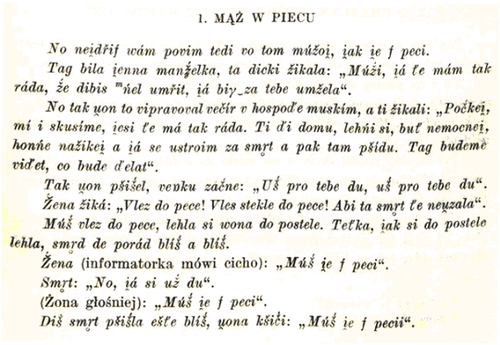
Text Husband in the oven, transcribed on the basis of the recording of Marta Machova, conducted by Zenon Sobierajski (Siatkowski 1962b: 111
Siatkowski 1962b / komentarz/comment/r / Siatkowski, Janusz 1962b. Dialekt czeski okolic Kudowy. Fleksja, słownictwo, teksty. Część II. Wrocław – Warszawa – Kraków: Zakład Narodowy im. Ossolińskich.
).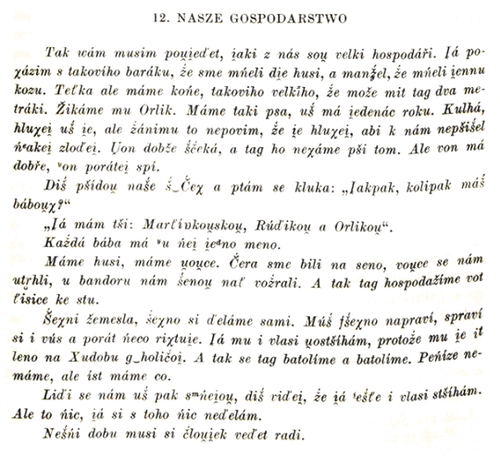
Text Our farm, transcribed on the basis of the recording of Marta Machova, done by Zenon Sobierajski (Siatkowski 1962b: 119
Siatkowski 1962b / komentarz/comment/r / Siatkowski, Janusz 1962b. Dialekt czeski okolic Kudowy. Fleksja, słownictwo, teksty. Część II. Wrocław – Warszawa – Kraków: Zakład Narodowy im. Ossolińskich.
).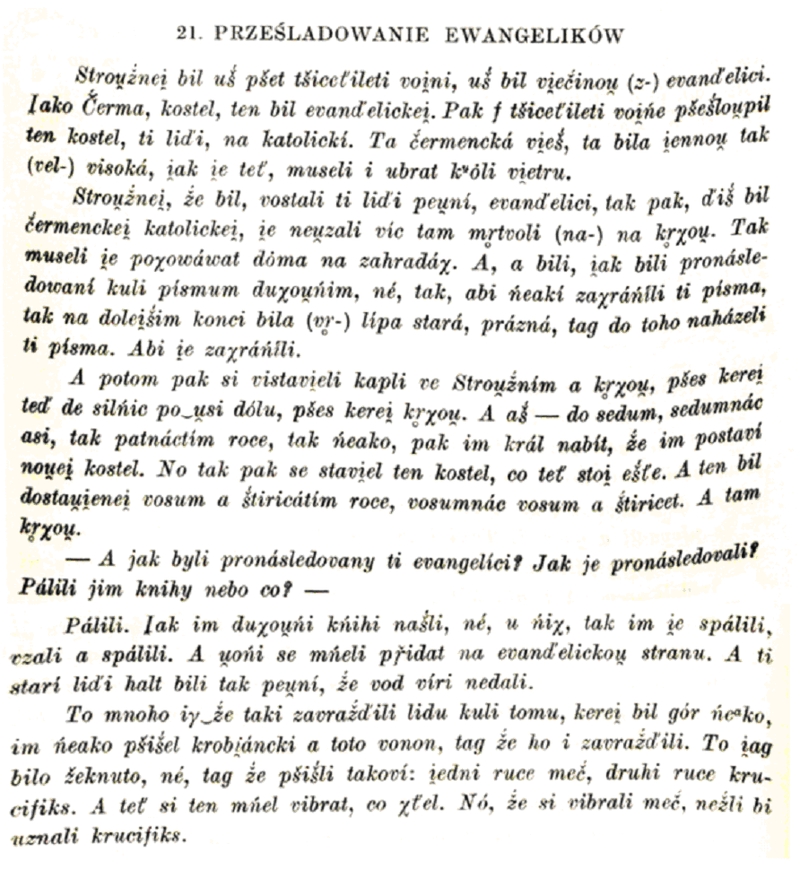
Text Persecution of Evangelists, transcribed on the basis of the recording of Emil Cvikýř, done by Zenon Sobierajski (Siatkowski 1962b: 125f
Siatkowski 1962b / komentarz/comment/r / Siatkowski, Janusz 1962b. Dialekt czeski okolic Kudowy. Fleksja, słownictwo, teksty. Część II. Wrocław – Warszawa – Kraków: Zakład Narodowy im. Ossolińskich.
).ISO Code
| ISO 639-1 | cs |
| ISO 639-2 | cze/ces |
| ISO 639-3 | ces |
| SIL | CES |
- przyp01
- przyp02
- przyp03
- przyp04
- przyp05
- przyp06
- przyp07
- przyp08
- przyp09
- przyp10
- przyp11
- przyp12
- przyp13
- przyp14
- przyp15
- przyp16
- przyp17
- przyp18
- przyp19
- przyp20
- przyp21
- przyp22
- przyp23
- przyp24
- przyp25
- przyp26
- przyp27
- przyp28
- przyp29
- przyp30
- przyp31
- przyp32
- przyp33
- przyp34
- przyp35
- przyp36
- przyp37
- przyp38
- przyp39
- przyp40
- przyp41
- przyp42
- przyp43
- przyp44
- przyp45
- przyp46
- przyp47
- przyp48
- przyp49
- przyp50
- przyp51
- przyp52
- Tekst ustawy w literackim języku czeskim
- Tobjański 1994
- Oszczęda 2010
- Gawliczek 2012
- Góral et al. 1987
- Dejna 1990
- Lubos 1974
- Siatkowski 1962a
- Krajewska-Kułak & Łukaszuk 2010
- Tomaszewski 1985
- Solak 2005
- Balowski 2012
- Vaculík 2011
- Policar 2008
- Pałys 2007
- Jabłoński 2002
- Šembera 1876
- Siatkowski 1997
- Tomaszewski 1991
- Kwilecki 1963
- Dejna 1984
- Wróblewski 2012
- Dejna 1981
- Hodura 1925
- Siatkowski 1962b
- Siatkowski 1974
- Bachmannová 2003
- Balowska 2012
- Rospond 1959
- Siatkowski 1996
- Wróblewski 1996
- Wlekły 2008
- Chałupczak & Browarek 2000
- Nijakowski 2012
- Kościak 2012
- Kubin 1913
- Wolska 1980
- Dejna 1983a
- zagrożenie języków / language endangerment
- Czesi w Polsce
- Herb Zelowa
- Zdjęcie domu w Pstrążnej
- Osady czeskie na Wołyniu XIX/XX w
- Czeskie dialekty
- Mapa Prowincji Śląskiej z 1905 r
- III Rzesza - mapa administracyjna terenów Polski
- Kościół ewangelicko-reformowany w Pstrążnej
- Cmenatrz w Pstrążnej
- Okładka monografii J. Siatkowskiego
- Okładka słownika Karola Dejny
- Okładka książki W. Kriegseisena
- Wnętrze zboru w Zelowie
- Tablica w zborze w Zelowie
- Nagrobek w Zelowie
- Husův kámen w Zelowie
- Tekst "Mąż w piecu"
- Tekst "Nasze gospodarstwo"
- Tekst "Prześladowanie ewangelików"
- Dwujęzyczna tablica w Zelowie
- Czesi w okolicach Gęsińca/Husinca
- Ludność czeska w okolicach Kucowa
- Czeski kątek