Lemko Rusyn
Standardization
Systematic attempts to standardize the Lemko language that hadlasted since the 1990s were done as part of the process of standardizing particular dialects of the Rusyn language which began in Poland, Slovakia and Ukraine at the end of the 1980s. The movement was quickly joined by representatives of Rusyn groups from Hungary and Romania, as well as those inhabiting Vojvodina and Srem (former Yugoslavia, presently – Serbia and Croatia). The movement was supported to a large extent by Carpatho-Rusyn descendants of Rusyn emigrants in Canada and the USA. Paul Magocsi, who later on became the chairman of the World Council of Rusyns, is one of the leading Carpatho-Rusyn activists (http://www.stowarzyszenielemkow.pl/new/modules/publisher/item.php?itemid=35).The First Rusyn Language Congress took place in Bardejovské Kúpele (Bardejów-Zdrój / Бардеёвскы Купелї) in Slowakia in 1992. The congress agreed on a system according to which, in order to form a common literary language of the Rusyns, local literary standards were to be created in Ukraine, Slovakia and Poland. Then, on the basis of those new standards, along with the standard developed in 1923 for the Rusyn language used in Serbia and Croatia, one standard, common for all the Rusyns, was to be formed (Magocsi 2004: 9-11
 Magocsi 2004 / komentarz/comment/r /
 Magocsi, Paul (red.) 2004. Русыньскый язык. Najnowsze dzieje języków słowiańskich. Opole: Uniwersytet Opolski.
 ). This rule, called the Rhaeto-Romance rule, was formerly used in Switzerland to create the Romansh language.
The Slovakian and Polish versions of the standard were created, respectively, in 1995 and 2000. As of today, there is no generally accepted standard for the Rusyn language in Ukraine, nor for the Rusyn language island in Romania. A compilation of works titled Русиньскый язык, published in Opole in 2004, as part of the series Recent history of the Slavic languages (Magocsi 2004
Magocsi 2004 / komentarz/comment/r / Magocsi, Paul (red.) 2004. Русыньскый язык. Najnowsze dzieje języków słowiańskich. Opole: Uniwersytet Opolski.
, Wańko 2004Wańko 2004 / komentarz/comment/r / Ванько, Юрай [Wańko] 2004. „Класiфкацiя i головны знакы карпатскых русинскых дiалектiв”, w: Paul Magocsi (red.) Najnowsze dzieje języków słowiańskich: Русыньскый язык. Opole: Uniwersytet Opolski, s. 67-84.
), was an attempt to summarize the efforts made by researchers to standardize the Lemko language and other varieties of Rusyn. It included, among others, the results of standardization work in Hungary (Benedek 2004Benedek 2004 / komentarz/comment/r / Benedek, Gergely 2004. „Мадярьско”, w: Paul Magocsi (red.) Najnowsze dzieje języków słowiańskich: Русыньскый язык. Opole: Uniwersytet Opolski, s. 263-276.
).The 3rd Rusyn Language Congress took place in Cracow in 2007. Among its resolutions, there was a declaration to accelerate the efforts to create a common standard for all the Rusyn varieties (Plišková 2008: 233-5
Plišková 2008 / komentarz/comment/r / Плїшкова, Анна [Plišková] (red.) 2008. Русиньскый язык меджі двома конґресами: Зборник рефератів з III Меджінародного конґресу русиньского языка. Пряшів: Світовый конґрес Русинів.
).Standardization in Poland
The first Lemko textbooks were introduced in the first half of the 1930s (Magocsi 2004: 98Magocsi 2004 / komentarz/comment/r / Magocsi, Paul (red.) 2004. Русыньскый язык. Najnowsze dzieje języków słowiańskich. Opole: Uniwersytet Opolski.
). A couple of Lemko-language magazines were also published. The first description of the contemporary grammar of the Lemko language, written by Mirosława Chomiak, was not published until 1992. The next important publication was Jarosław Horoszczak’s The First Lemko-Polish Dictionary (1993Horszczak 1993 / komentarz/comment/r / Horszczak, Jarosław 1993. Перший лемківско-польскій словник. Warszawa: Rutenika.
). The author was not a linguist, and there are some inaccuracies in the dictionary (for example, it gives definitions of some Lemko words instead of translations) but as of today it remains the largestbiggest publication with such a wide range of vocabulary.
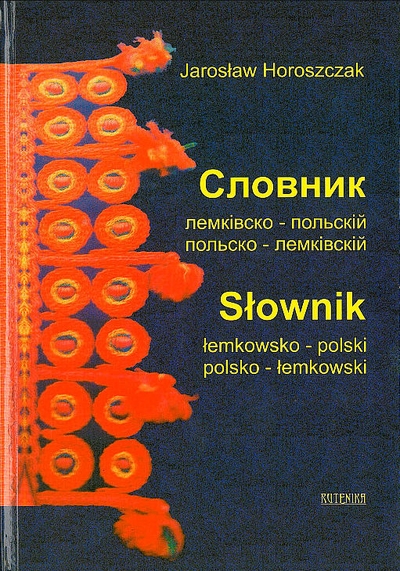
Cover of J. Horoszczak’s Słownik łemkowsko-polskiego (Lemko-Polish dictionary)
In 2000, the first comprehensive grammar of the Lemko language appeared, written by Henryk Fontański and Mirosława Chomiak. Its next issue was published in 2004, with a slightly changed orthography. Fontański and Chomiak (2000: 12-13
Fontański i Chomiak 2000 / komentarz/comment/r / Fontański, Henryk & Mirosława Chomiak 2000. Gramatyka języka łemkowskiego. Katowice: Śląsk.
) do not mention the larger context of Rusyn language codification in the introduction; they do, however, talk about the codification made by the southern Lemkos (that is, the Prešov Rusyns) in 1995.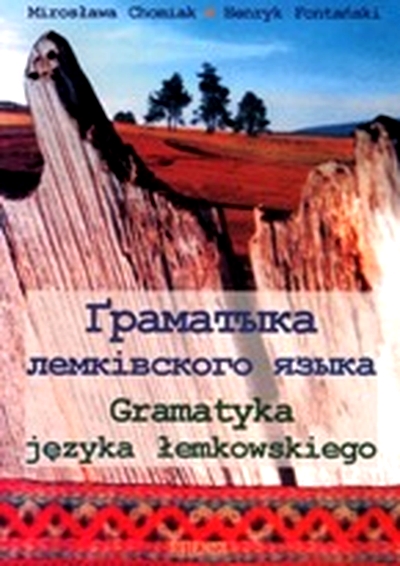
Cover of Gramatyka języka łemkowskiego (Grammar of the Lemko language)
Standardization in Slovakia
The results of the work on the Prešov standard used by the Rusyns in Slovakia were presented in a publication issued by Rusínska Obroda society in 1994 (Jabur 1994Jabur 1994 / komentarz/comment/r / Ябур, Василь & Ю. Панько [Jabur & Panko] 1994. Правила русиньского правопису. Пряшів: Русиньска оброда.
). A newer version of the standard, with changes in orthography, among many others, was published later on (Jabur 2005Jabur 2005 / komentarz/comment/r / Ябур, Василь & Анна Плїшкова [Jabur & Plišková] 2005. Русиньскый язык у зеркалї новых прави про основны і середнї школы з навчанём русиньского языка. Пряшів: Русин і Народны Новинкы.
).
On 27th January 1995 in Bratislava, content of the official act of codification of the Rusyn language in Slovakia was presented. Since then, the codified Rusyn language has found its use in many different fields, for example, in the social sphere, theatre, media, literary works, religion and education (Plišková 2008aPlišková 2008a / komentarz/comment/r / Plišková, Anna 2008a. “Practical Spheres of the Rusyn Language in Slovakia”, Studia Slavica LIII/ 1: 95-117.
). Changing the name of the National Theatre of Ukraine in Prešov (Пряшів) to Alexander Duchnovič Theatre (Tеатр Александра Духновича), in honour of a Rusyn activist, poet and writer who had come from the Prešov area, illustrates the rise in prestige of the codified Rusyn language in Slovakia. At the same time, plays in the local Rusyn language started to be staged (Plišková 2008a: 97Plišková 2008a / komentarz/comment/r / Plišková, Anna 2008a. “Practical Spheres of the Rusyn Language in Slovakia”, Studia Slavica LIII/ 1: 95-117.
).Standardization in Ukraine
As it was previously mentioned, the resolutions made by the Congress of 2007 include, among the current problems concerning the codification of particular Rusyn varieties, the resolution about finishing work on the language of Rusyns living in Ukrainian Zakarpattia Oblast (Ukr. Закарпатська область, Lem. Закарпатьска область) (Plišková 2008a: 233Plišková 2008a / komentarz/comment/r / Plišková, Anna 2008a. “Practical Spheres of the Rusyn Language in Slovakia”, Studia Slavica LIII/ 1: 95-117.
). Igor Kerča’s compilation, published in Русиньскый язык in 2004, is one of the propositions (Kerča 2004: 117Kerča 2004 / komentarz/comment/r / Керча, Иґорь [Kerča] 2004. „Пудкарпатьска Русь”, w: Paul Magocsi (red.) Najnowsze dzieje języków słowiańskich: Русыньскый язык. Opole: Uniwersytet Opolski, s. 115-146.
).Standardization in Serbia and Croatia
The Rusyn language used by the Rusyns in the area of former Yugoslavia was codified by Gabriel Kostelnik (1923Kostelnik 1923 / komentarz/comment/r / Костельник, Ґабор [Kostelnik] 1923. Граматика бачваньско-рускей бешеди. Срем: Руске Народне Просвитне Дружтво Руски Керестур.
). After that, the standard was refined by Mikoła Kočiš (1971Kočiš 1971 / komentarz/comment/r / Кочиш, Микола [Kočiš] 1971. Правопис руского язика.
) and Julijan Ramač (2002Ramač 2002 / komentarz/comment/r / Рамач, Юлиян [Ramač] 2002. Ґраматика руского язика. Беоґрад: Завод за учебнїки и наставни средства.
). The language spoken by the Rusyns who inhabit Vojvodina is quite significantly different from the rest of the Rusyn dialects due to the presence of numerous elements from Western Slavic and Southern Slavic languages.
ISO Code
the Rusyn language-complex:
| ISO 639-3 | rue |
| SIL | RUE |
- wywiad z ks. A.Grabanem w Strzelcach Krajeńskich
- przyp01
- przyp02
- przyp03
- przyp04
- przyp05
- przyp06
- tekst ustawy w języku łemkowskim
- Rieger 1995
- Łesiw 1997
- Połowinkin 1896
- Lewicki 1834
- Werchratski 1902
- Stieber 1982
- Zubrzycki 1837
- Czajkowski 1999
- Reinfuss 1961
- Duć-Fajfer 2001
- GUS RP 1938
- GUS RP 1938a
- Nowakowski 1992
- Magocsi 1999a
- Duć-Fajfer 2002
- Reinfuss 1990
- Rybakow 1983
- Orłowska 2012
- Łesiw 2009
- Dulichenko 2006
- Michna 1995
- Pudło 1987
- Duć-Fajfer 1998
- Moklak 1997a
- Mazurowska 2009
- Myszanycz 1997
- Kuzio 2005
- Fontański 2004
- Wańko 2004
- Plišková 2008
- Horbal 1997
- Duć-Fajfer 2004
- Chomiak 2003
- Chomiak 2004
- Fontański i Chomiak 2000
- Chomiak 1995
- Chomiak 2004a
- Chomiak 2005
- Dubec 2007
- Ziłyński 1934
- Ziłyński 1938
- Stieber 1959
- Narodowy Spis Ludności i Mieszkań 2011
- Arkuszyn 2009
- Pancio 2009
- Horszczak 1993
- Jabur 1994
- Jabur 2005
- Plišková 2008a
- Kerča 2004
- Kostelnik 1923
- Kočiš 1971
- Ramač 2002
- Oświata i wychowanie w roku szkolnym 2010/2011
- Mały Rocznik Statystyczny Polski 2012
- Chomiak 1992
- Magocsi 2004
- Moklak 1997
- Kedryn 1937
- Benedek 2004
- Duć-Fajfer 1993
- Duć-Fajfer 2006
- zagrożenie języków / language endangerment
- Mapa Łemkowszczyzny
- Osturna
- Mapka Rusi Szlachtowskiej
- Obszary zamieszkane przez Łemków i sąsiedzi
- Tereny zamieszkane przez Białych Chorwatów
- Bukowina
- Pomnik_ofiar_Talerhofu_we_wsi_Leszno
- Tablica gora Jawor
- Lemko_Tower
- Mapa zasięgu zapożyczeń na terenie Łemkowszczyzny
- Galicja wschodnia
- Horoszczak gramatyka
- Słownik łemkowsko-polski Horoszczaka
- Lemko Tower
- Tablica Regietów
- Tablica Nowica
- Besida nr 04
- Lemkiwśki Ricznyk 2009
- Płyta nagrobna Radocyna
- plakat łemkowski na Spis powszechny 2011